
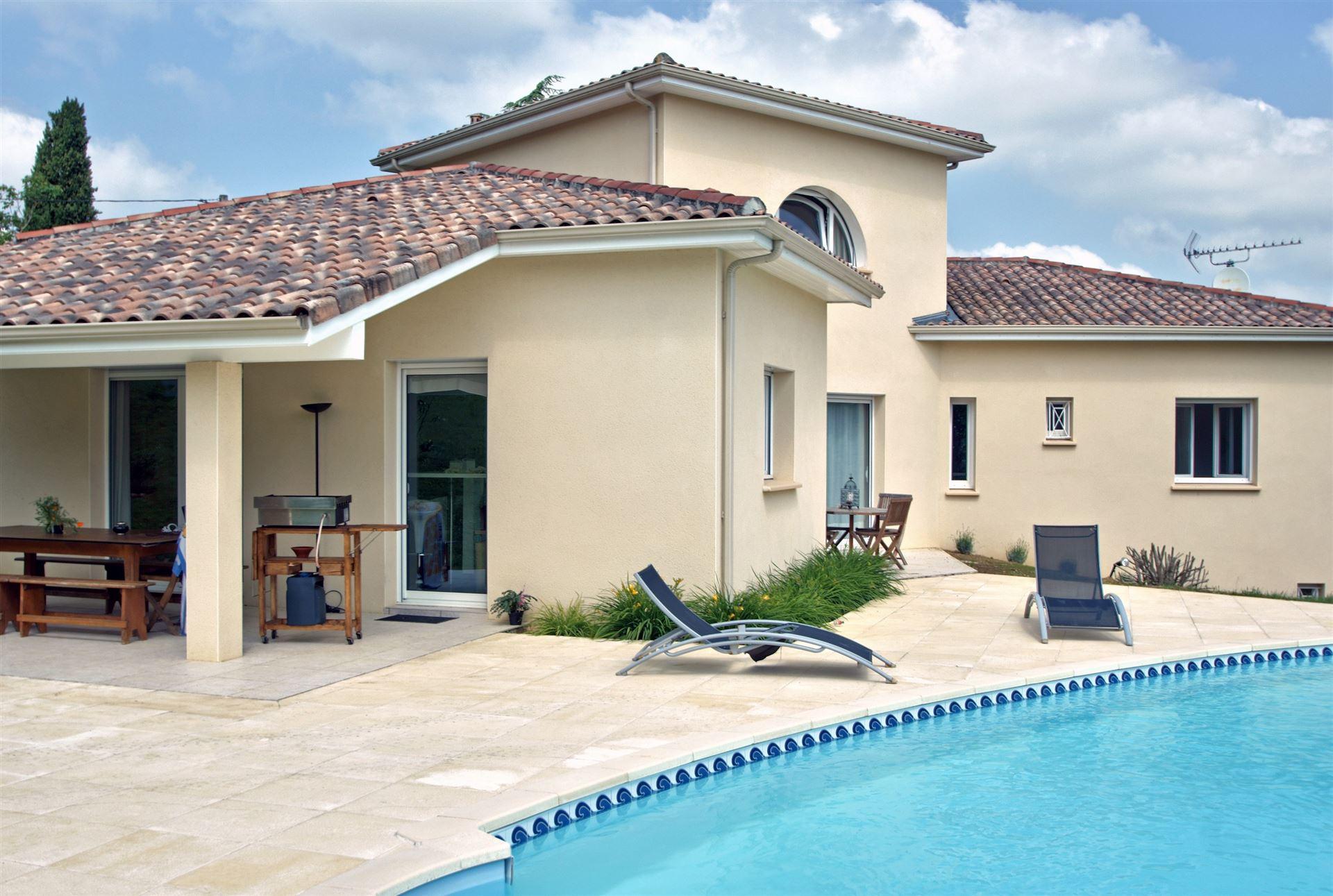
It all starts with the plot. Its location shapes daily life to come: distance from schools, shops and main roads. But its own characteristics count just as much: the shape of the plot, its slope, its orientation, access for plant, and whether services are present (water, electricity, drainage).
Before committing to anything, check whether the land can be built on under the plan local d'urbanisme, the local planning code: zoning, permitted building footprint, set-backs from boundaries, rules on external appearance. A soil survey is also essential to size the foundations properly: some soils call for reinforced foundations, and a badly founded building is exposed to cracking that is hard to repair. This survey affects part of the budget, so it is better to know about it before you buy.
The design translates your way of living into drawings: number of rooms, how the spaces work together, the orientation of the living rooms to make the most of the light while keeping out the summer heat. At this stage, three-dimensional views help you picture the house and correct the drawings before they become final.
The budget must cover the whole project, not just the building: plot, notary's fees, connections, taxes, outdoor works. Allow a contingency as well, to absorb the unexpected, which is common on any site. It is this overall budget, agreed with your bank, that frames the project.
The permis de construire application, for French planning permission, is submitted to the mairie. It includes, among other things, a site location plan, a block plan, a section drawing and graphic material showing how the project sits in its surroundings. The processing period runs from the submission of a complete application, and displaying the permission on site opens the period during which third parties can object.
For new build, RE2020, the French environmental regulation, has applied since 2022: energy performance, summer comfort and the carbon footprint of materials are taken into account from the design stage. These requirements are prepared upstream, when the drawings are made, not once work has started.
The works follow a logical order: earthworks, foundations, building the walls, in concrete block, brick, concrete or stone depending on the project, then the roof structure and roof covering. At that point the house is hors d'eau, watertight. Fitting the external joinery makes it hors d'air, airtight. Then come the second-fix works (partitions, electrical and plumbing services, insulation) and the finishes.
Regular supervision makes the difference: site meetings, reviews at each key stage, checks against the drawings. The overall duration depends on the size of the project, the weather and lead times on materials. A realistic programme announced at the outset is worth more than a promise that cannot be kept.
Handover, la réception des travaux, is the act by which you accept the building, with or without reservations, recorded in a formal statement, the procès-verbal. This document is not a formality: it marks the start of the French statutory warranties, the garantie de parfait achèvement (one year), the garantie biennale on fittings (two years) and the garantie décennale on the soundness of the building (ten years). The assurance dommages-ouvrage, taken out before work begins, provides rapid pre-funding of repairs where a defect falls under the décennale.
The contractual framework varies with the arrangement chosen: the contrat de construction de maison individuelle (CCMI), tightly regulated by French law, exists alongside appointing a project manager (maîtrise d'œuvre) and dealing directly with a main contractor. Each formula has its own protections, so find out which one applies to your project before you sign.
MCI Construction carries out the structural work with its own teams and works in Narbonne and the Grand Narbonne, the Corbières, the Minervois and along the Aude coast, as far as Béziers. The company holds garantie décennale and assurance dommages-ouvrage cover.
Do you have a plot or a plan for a single-family home? MCI Construction will assess your project and draw up a free quote.