
Getting started right
The right plot makes the right house. Here is what to check before you sign — and why it is the plot itself, its shape, its ground and its orientation, that decides the house you will be able to build on it.
Before you buy
These checks prevent the vast majority of unpleasant surprises.
The certificat d'urbanisme
Free of charge, this French planning certificate states what the plot really allows you to build. It is the first check to make, before any promise.
Utility connections
Water, electricity, drainage: an unserviced plot can hide substantial connection costs.
Easements and access
Rights of way, buried pipes, access for the works: all of these shape the project and its budget.
The soil survey (loi ELAN)
In areas at risk from shrinking and swelling clay soils — the Aude is affected — the seller of a building plot must provide a geotechnical survey, valid for 30 years. It determines the type of foundations. Always ask the seller for it, and keep it.
Drainage and waste water
If the town has no mains drainage, a private sewage treatment system will be needed, designed for the nature of the soil and the space available — a cost to build into the budget from the outset.
The PLU and the development rules
Maximum building footprint, height, distances from boundaries, appearance of façades and roofs; on a serviced development, the rules may also impose colours, fencing and siting. These rules guide the choice of design — a single-storey house takes up more footprint than a two-storey house on a narrow plot.
These checks sometimes mean going into detail: our article choosing a building plot in Narbonne goes through them one by one, with what to ask the seller.
The price is not the cost
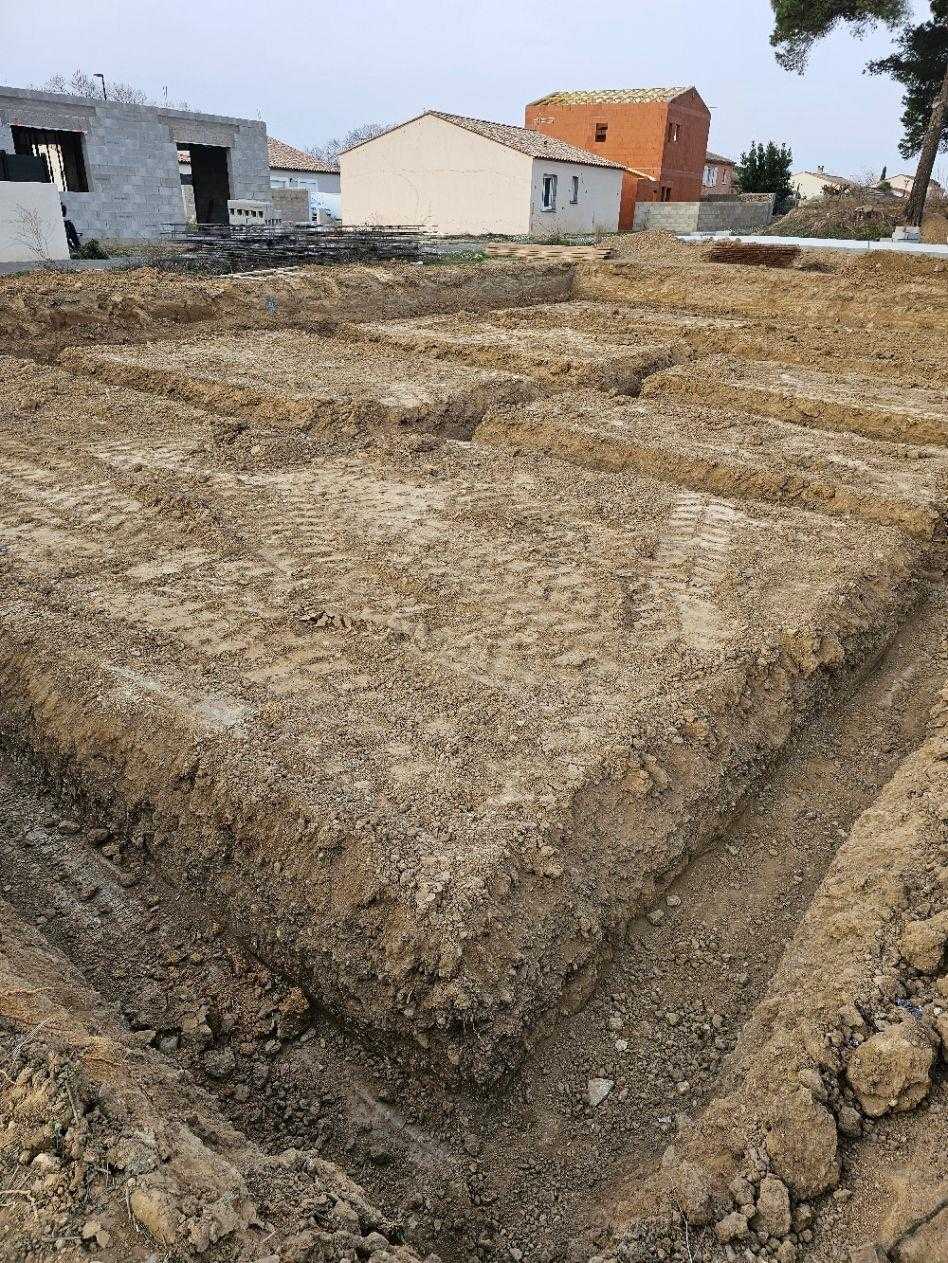
The price per square metre says nothing about what the plot will demand once a project is set down on it. A slope to level out, an access too narrow for machinery, a depth of excavation dictated by the ground: these are works in their own right, and they are costed before the purchase, not after.
Because earthworks and structural work are our original trade and because we carry them out ourselves, we know how to read a plot: what its preparation will cost goes into the budget we hand you, just like the house itself.
It is also what allows us to tell you plainly when a plot is not right. Better to hear that before you sign than at the first bite of the digger bucket.
How it works
You don't need to be a planning expert: send us the plot you like, and we'll take care of the rest.
You send us the plot
The link to the listing or the address of the plot is enough. If the seller has already given you the planning certificate or the soil survey, attach them: that is where we start from.
We come and see it
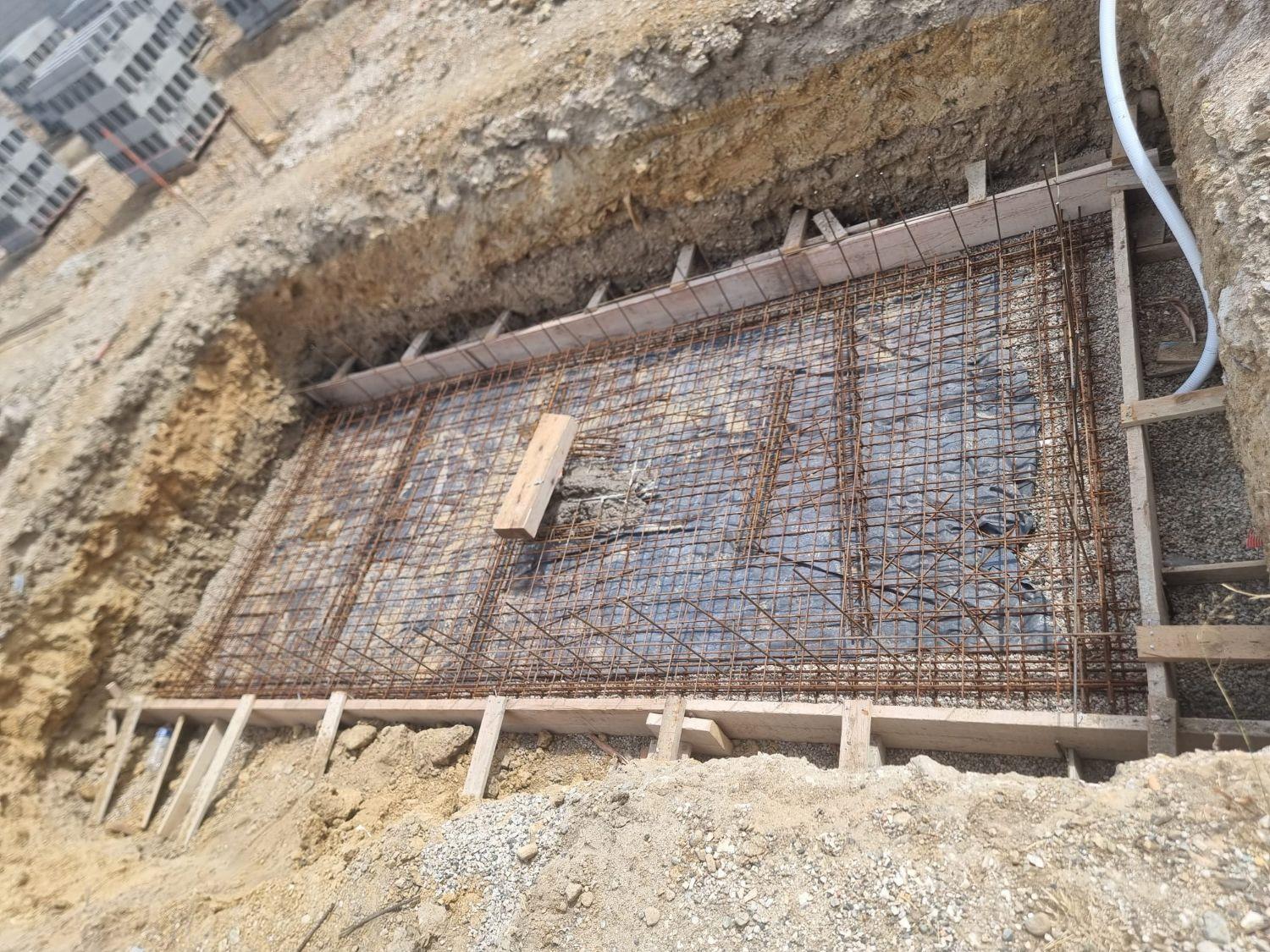
On site: the slope, access for machinery, the adjoining properties, the services at the plot boundary. A listing and an aerial view never tell you any of that.
We test it against your project
Local planning rules and estate rules on one side, the floor area and house type you want on the other: we tell you what that plot really allows you to build.
You decide before you sign
You receive an outline design and an overall budget: construction, adapting the build to the plot and associated costs. And if the plot doesn't suit your project, we'll tell you that too.
Our principle
Shape, width, slope, solar orientation: it is the plot that guides the choice of design — narrow plot, sloping plot, single-storey or two-storey.
Have you found a plot? We will look at it on site, free of charge — feasibility, ground conditions, orientation, overall project budget — before you sign anything, and with no obligation.
Our 14 house designs are a starting point, never fixed plans: partitions are rearranged and the siting is drawn to suit your plot, not the other way round.
Have my plot assessedDepending on the town
A plot is always judged against its commune's local planning document. Two examples we come across often around Narbonne.
Finding a plot
Spot the listings on these portals, then send us the ones you like.
Do not stop at the property portals: estate agents and notaires around Narbonne list plots that do not always appear on them, and word of mouth is still effective in the villages.
FAQ
Serviced development or standalone plot: which to choose?
A plot on an estate comes with services already connected and makes the paperwork simpler, but its rules can constrain the architecture: colours, boundary walls, siting. An isolated plot offers more freedom, provided you check services, access and planning rules carefully — and cost their consequences before you buy.
Do you sell land?
No. We are neither an estate agency nor a land developer, and we hold no plots of our own. Our trade is building: we help you judge the plots you find and work out what you will be able to build on them.
I have already made an offer on a plot: is it too late to have it assessed?
No, and a good many projects reach us at that stage. The earlier we see the plot, the more room for manoeuvre you have — but the study is still worth having right up until the final deed is signed: it tells you what you will be able to build and what preparing the ground will cost.
Send us the listing before you sign: we will tell you what that plot really allows you to build.