
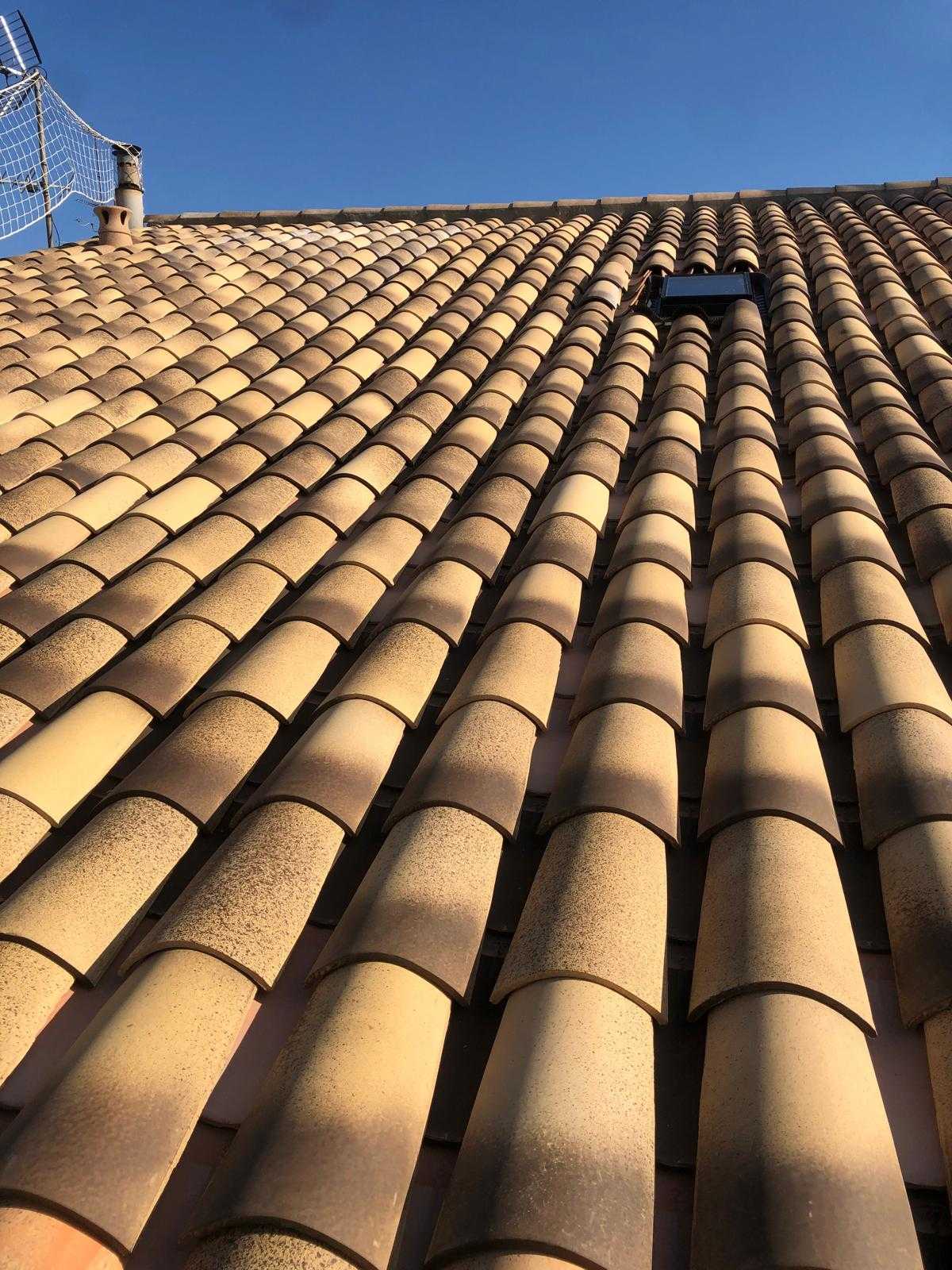
Roof covering · Roof structure · Zinc work
Roof structures and roof coverings are our own trade, not something we subcontract: the timber under the tiles is checked by the very teams who then lay the roof covering. Rapid call-out in the event of a leak; diagnosis and quote free of charge.
Three levels of work
Not every tired roof calls for the same work. The right move is the one that puts the problem right, not the biggest one.
One-off repair
Broken or slipped tiles, a localised leak after a gust of wind: we come out quickly to make the roof weathertight again.
Complete re-roofing
Roof covering at the end of its life: complete strip-off, deck made good, then a new roof covering laid in keeping with the style of the house and with the standards in force.
Moss removal and maintenance
Moss and lichen hold moisture and damage the tiles: regular moss removal and inspection extend the life of the roof.
When should you act?
The longer a roof problem waits, the more it costs: water getting in attacks the roof structure, then the ceilings, then the walls.
- Broken, slipped or missing tiles
- Damp marks or stains on the ceiling
- A musty smell in the loft
- Heavy moss on the roof covering
- A distorted or sagging roof structure
- Signs of insect attack in the timber
After a spell of tramontane or a heavy storm, a quick look from the ground is often enough to spot a slipped tile. Our pointers for knowing when to start the work — and why waiting costs more.
Local know-how
Between the Tramontane, heavy rain and high temperatures, roofs around Narbonne face demanding conditions.
The canal tile is perfectly suited to our climate: it sheds the rare but violent downpours quickly, and lets the roof breathe through the summer heat.
It does, however, call for careful fixing against the wind. A roof relaid properly must stand up to the tramontane — not merely look new on the day of handover.
The sun, for its part, works away without a break: it is often UV that makes tiles porous, long before a single one breaks. A roof covering that looks intact from the street may therefore have reached the end of its life.
How it works
Site visit & survey
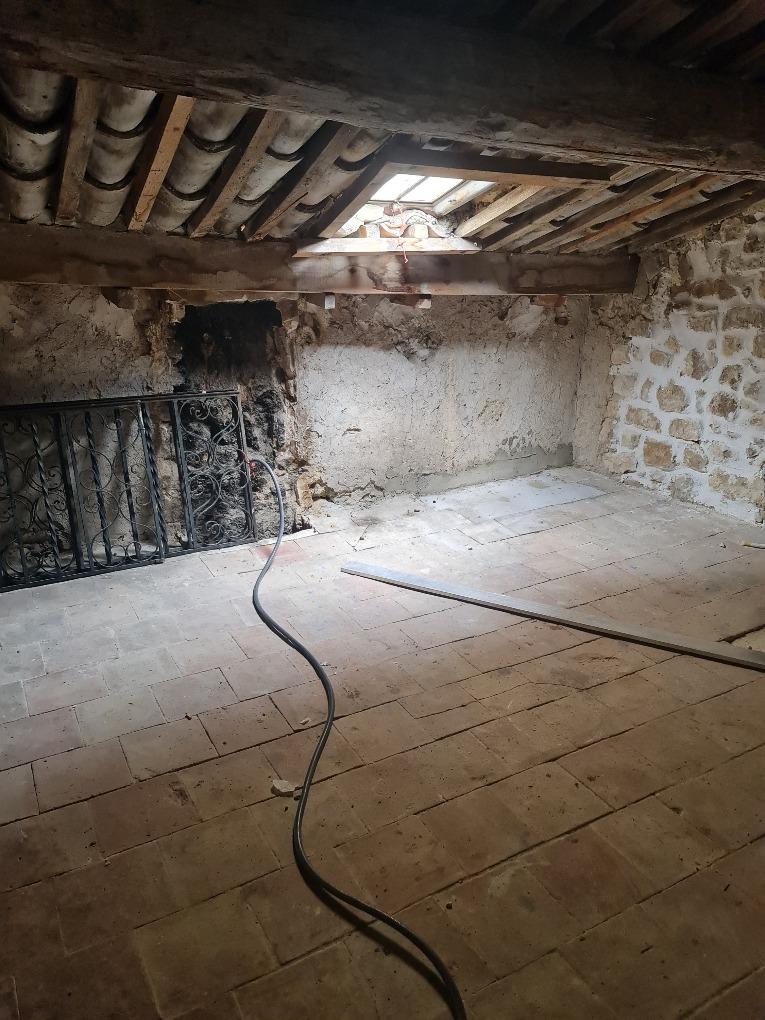
Inspection of the roof covering, the detail points and the roof structure seen from below. Above all we look for where the water is getting in: the entry point is rarely directly above the stain on the ceiling. The quote then sets out what can be repaired and what has to be replaced.
Strip-off & inspection
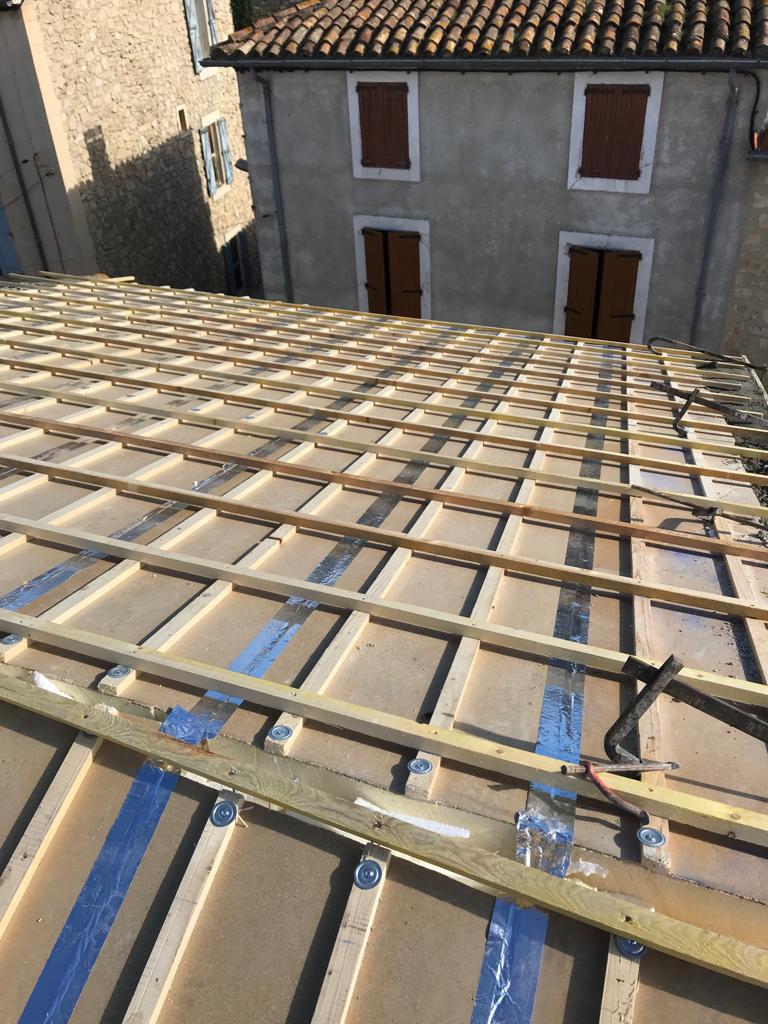
The roof covering is stripped off and the bare roof structure inspected; damaged timbers are treated or replaced, and the battens and substrate are made good before the covering is re-laid.
Re-covering & detailing
Laying the new roof covering, then dealing with everything that is not tile: ridge, verges, flashings and roof outlets — the places where the water gets in.
Finishing & handover
Flashings checked, gutters and downpipes inspected, site cleaned and rubble taken away. The warranty certificates are handed to you with the invoice.
The story of a project
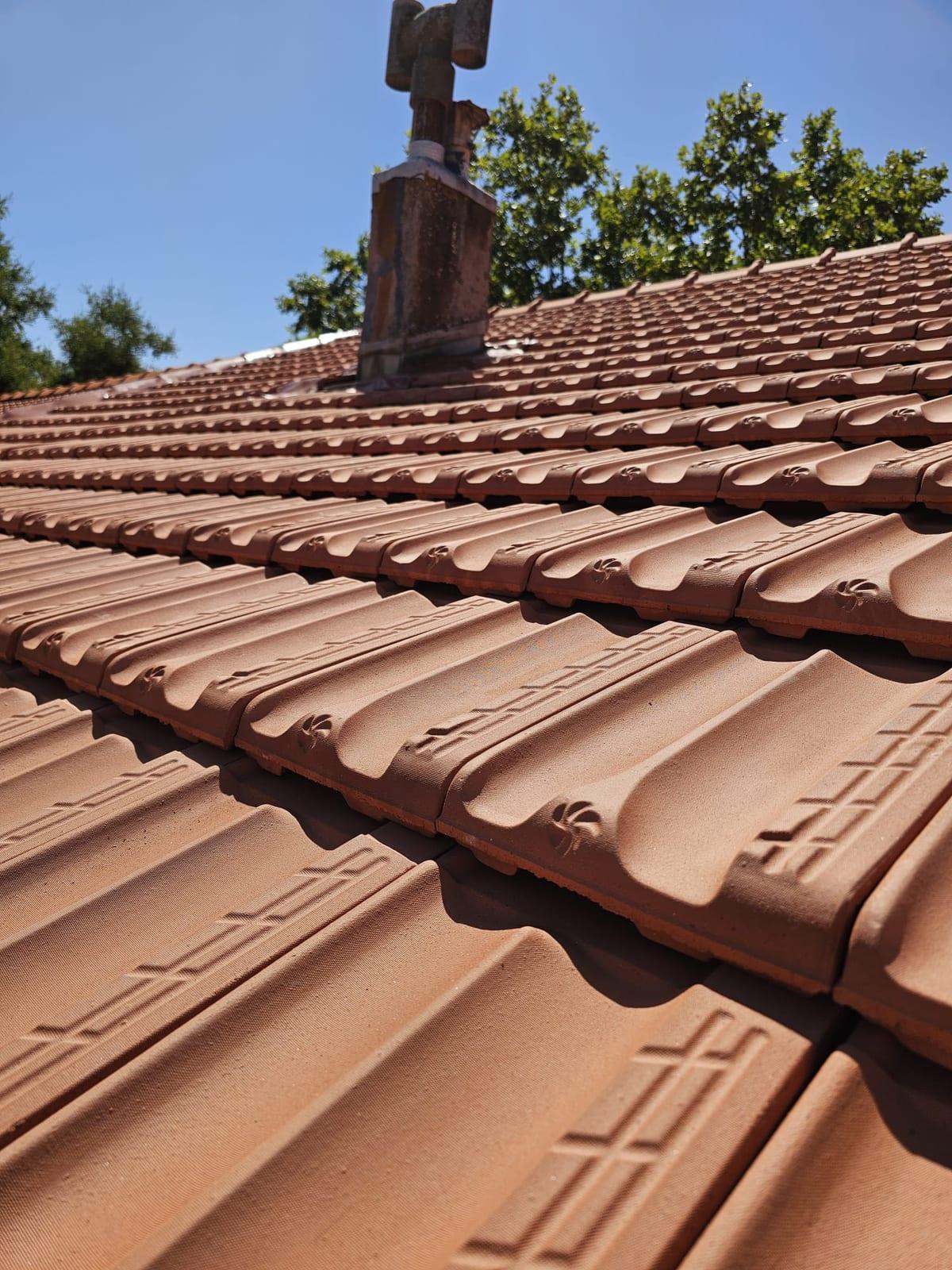
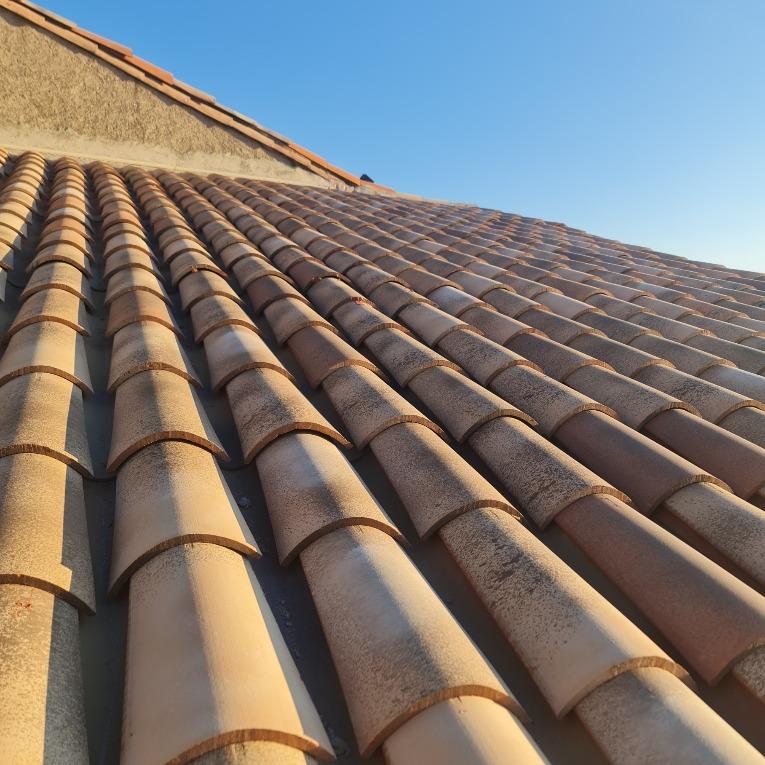
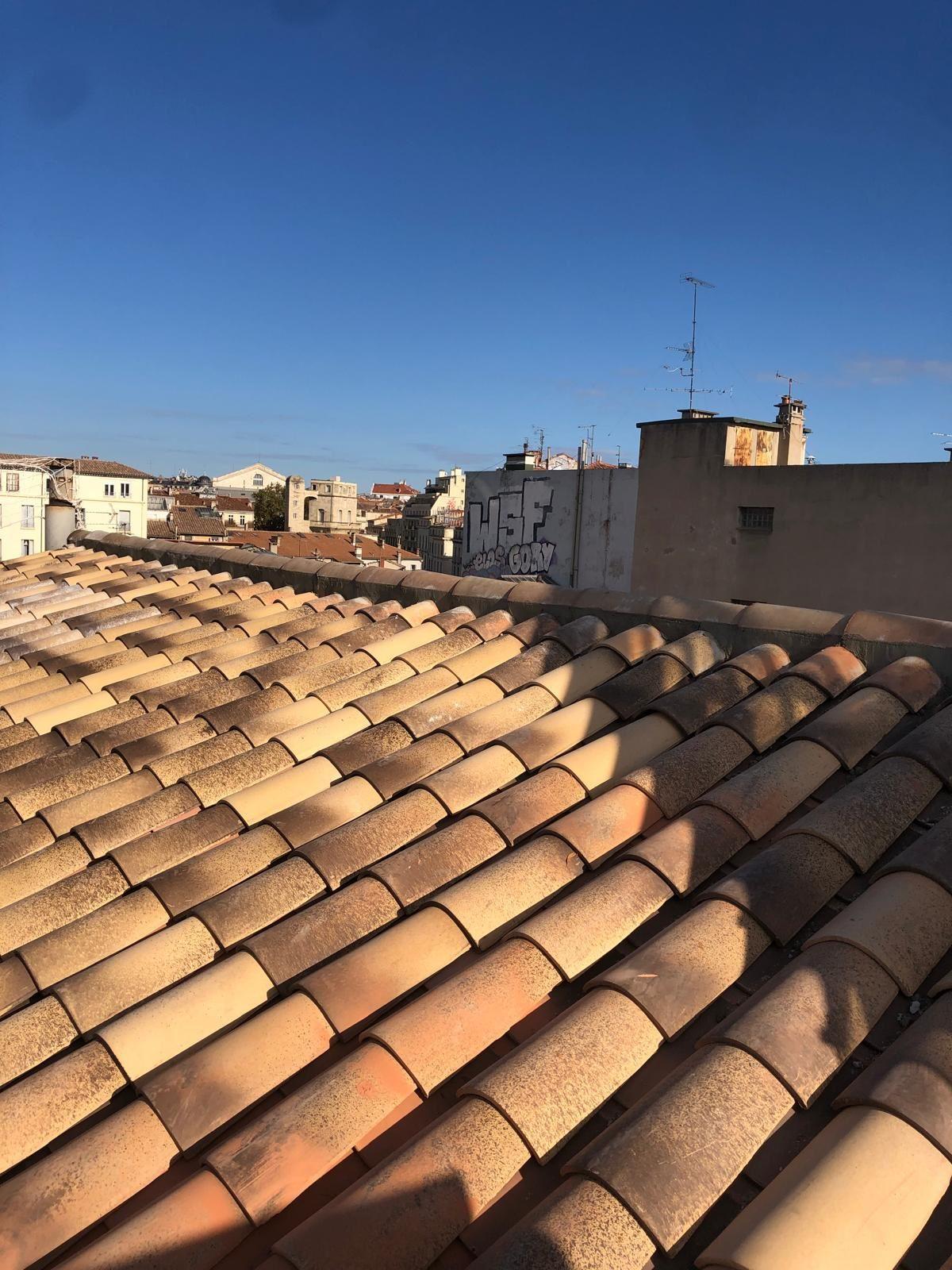
In Narbonne, a 10 × 9 metre plain-tile roof — some 90 m² of roof covering — entirely redone by our teams.
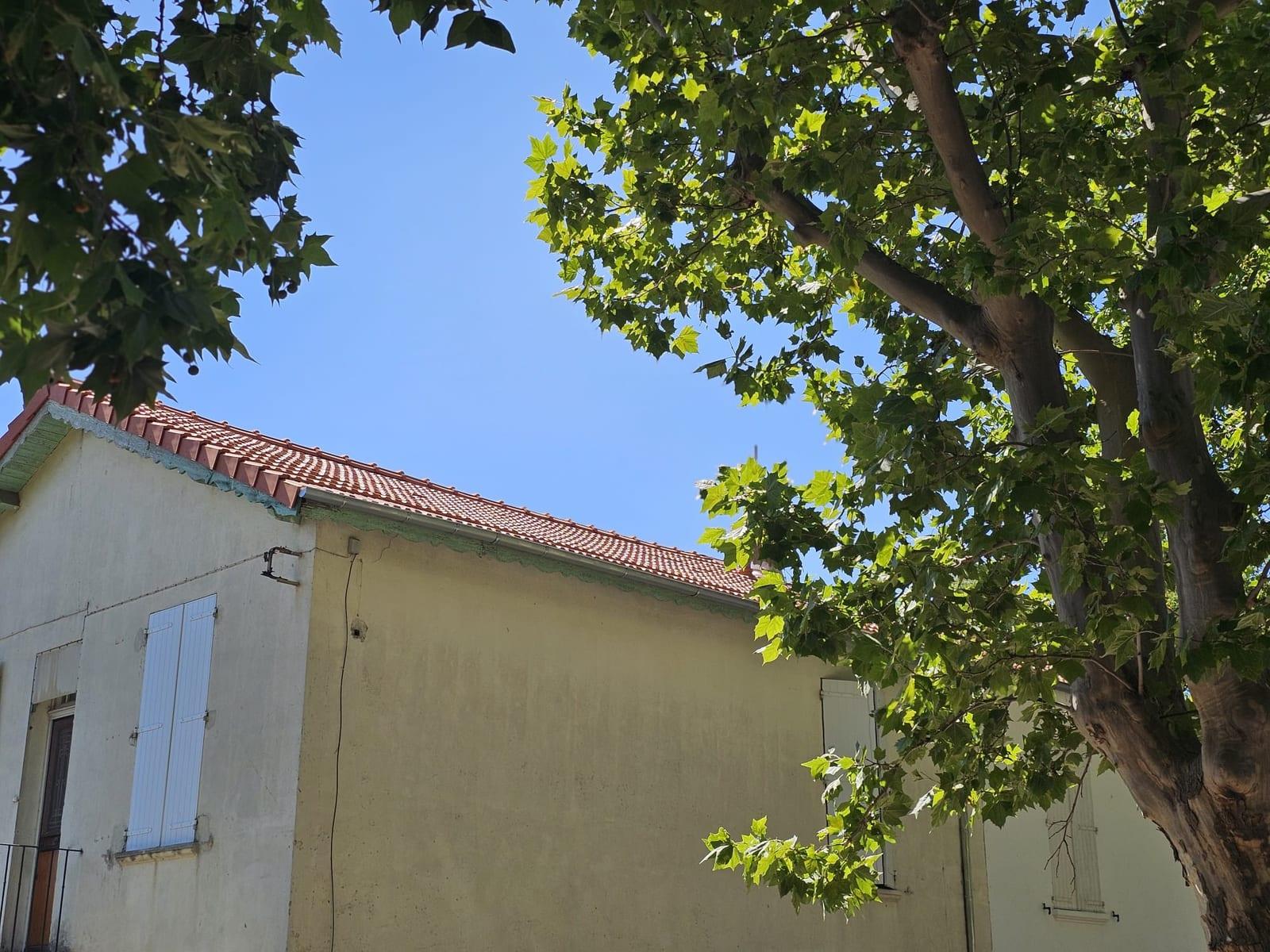
Before we could even get onto the roof, the town hall had to approve the scaffolding on the ground outside: around 10 metres long by 1 metre wide, nearly 6 metres high, plus a storage area.
The old plain tiles, by then porous, were stripped off along with the old battens, the gutter and the zinc downpipe. A skip on site and a telehandler allowed the lot to be taken away to the recycling centre.
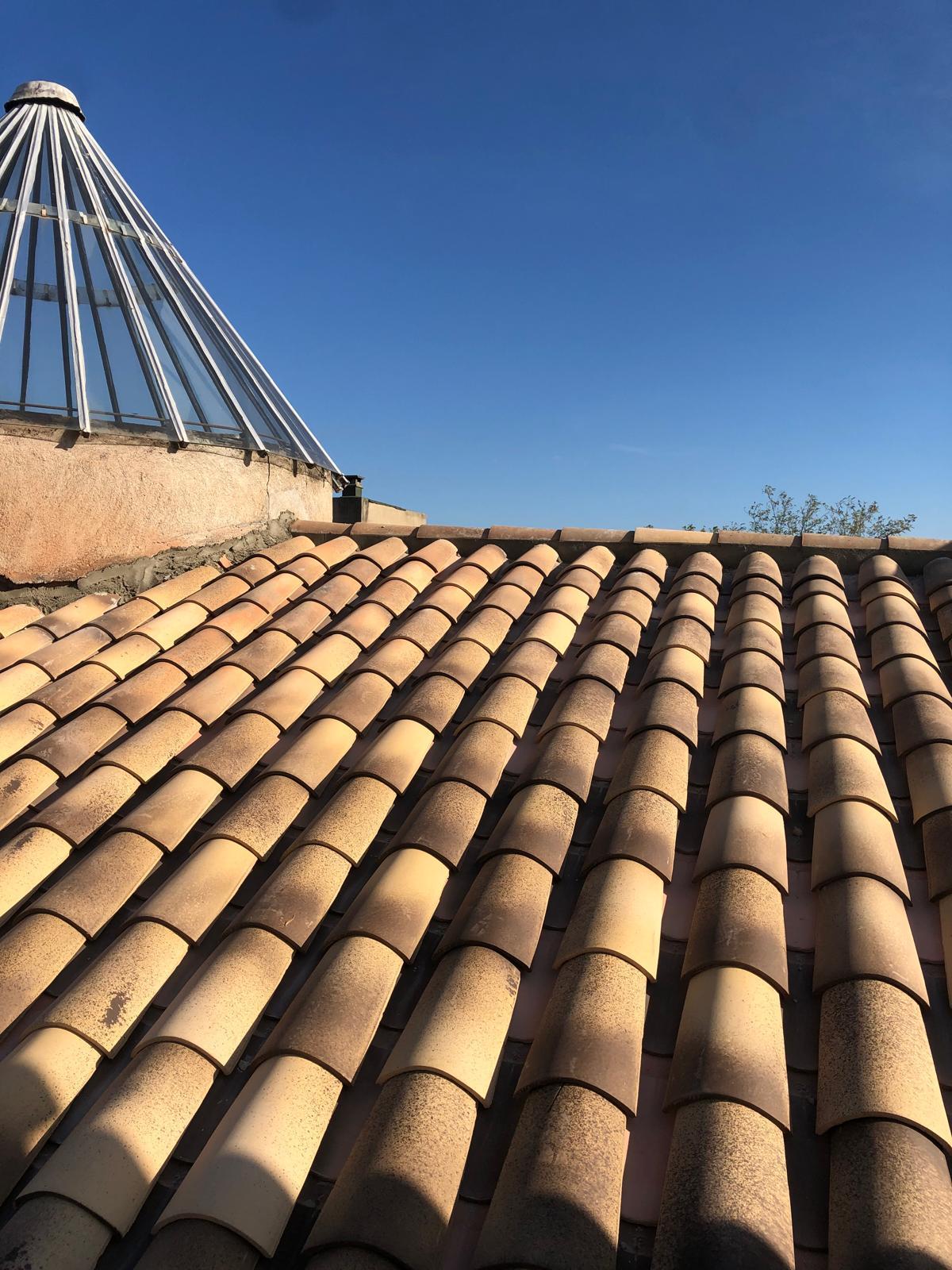
The substrate was rebuilt before the new tiles went on, aligned course by course. The verge was finished with a downturn over roughly 9 linear metres, and the ridge was dry-fixed with screws, with no mortar bedding. At the junction with the neighbouring roof, a Wakaflex strip of about 50 cm links the existing roof to the new covering; the chimney was given its weatherproofing sealant. New zinc guttering and a new downpipe closed out the job.
Our projects
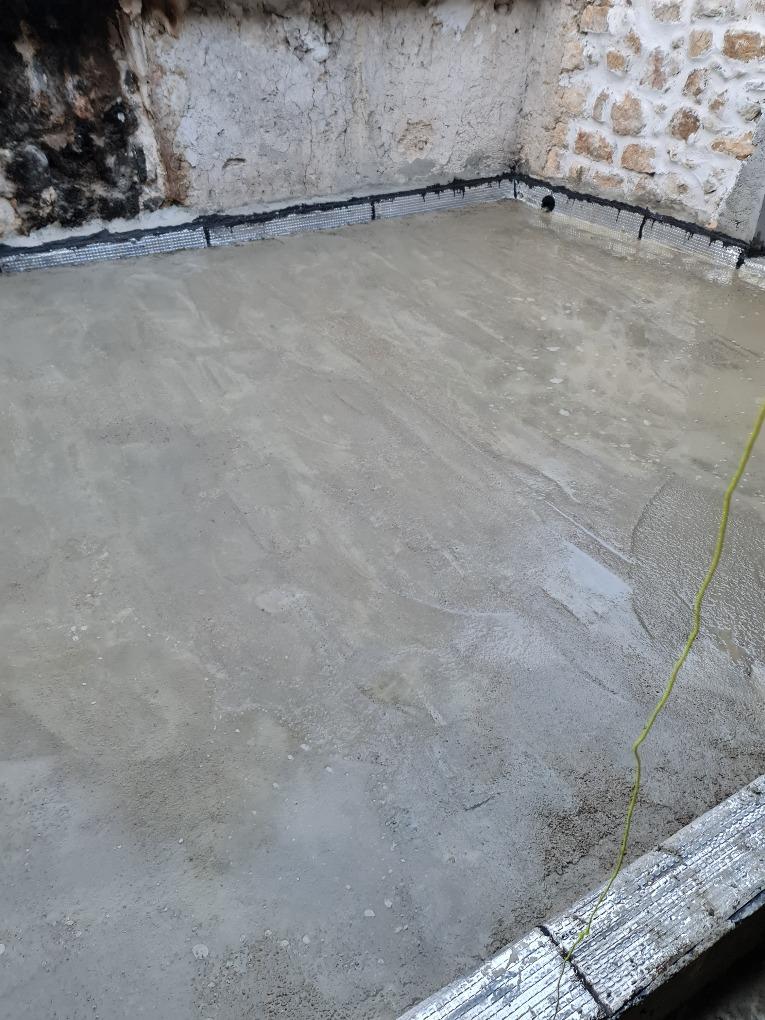
A few real projects by our teams in the Aude and nearby Hérault.
Your protection
Our roof covering and roof structure work is covered by the statutory construction warranties, including the garantie décennale, the French ten-year structural warranty.
1 year
Garantie de parfait achèvement
For the year following handover, any defects reported are put right by the company — the French one-year defects warranty.
2 years
Garantie biennale
This two-year warranty covers equipment that can be removed from the structure: taps, shutters, boiler…
10 years
Garantie décennale
For ten years it covers damage that affects the strength of the building.
In place
Assurance dommages-ouvrage
This insurance pre-finances repairs without waiting for a court decision. You are given the certificates.
FAQ
Should the roof be repaired or completely renewed?
It all depends on what the survey reveals. A localised leak or a few broken tiles can be repaired on the spot, without touching the rest. When the substrate is worn out across the whole surface, however, or the roof structure is affected, patching things up simply pushes the problem back by a winter or two, and you pay for the scaffolding twice. It is the actual condition of the roof that decides, not the biggest quote.
Do you need permission to replace a roof?
It depends on what the work changes. As soon as the external appearance is altered — material, colour, a new opening — a prior declaration of works is generally required; the local development plan may impose particular materials or colours, and in protected areas the approval of the architecte des Bâtiments de France may be needed. The scaffolding itself sometimes requires a permit from the town hall when it encroaches outside the property: that was the case on our plain-tile job in Narbonne. We tell you what your project involves from the very first visit.
Do you also deal with the roof structure and the rainwater goods?
Yes, and the detail points are dealt with as a matter of course: ridge, verges, flashings, gutters and downpipes. A cracked flashing or an undersized gutter is enough to damage a façade in a few winters — more than the tiles, it is these that decide whether a roof holds or lets the water back in.
Is it worth insulating the roof at the same time?
A house that is hard to heat in winter or that overheats in summer often points to inadequate roof insulation. Once the roof covering has been stripped, the substrate is accessible: that is the right moment to deal with insulation, and grants for energy renovation do exist — check the schemes currently in force. One point that is often misunderstood: RE2020 applies to new build, not to the renovation of existing buildings.
The survey and the quote are free — better to check now than to repair a roof structure later.