
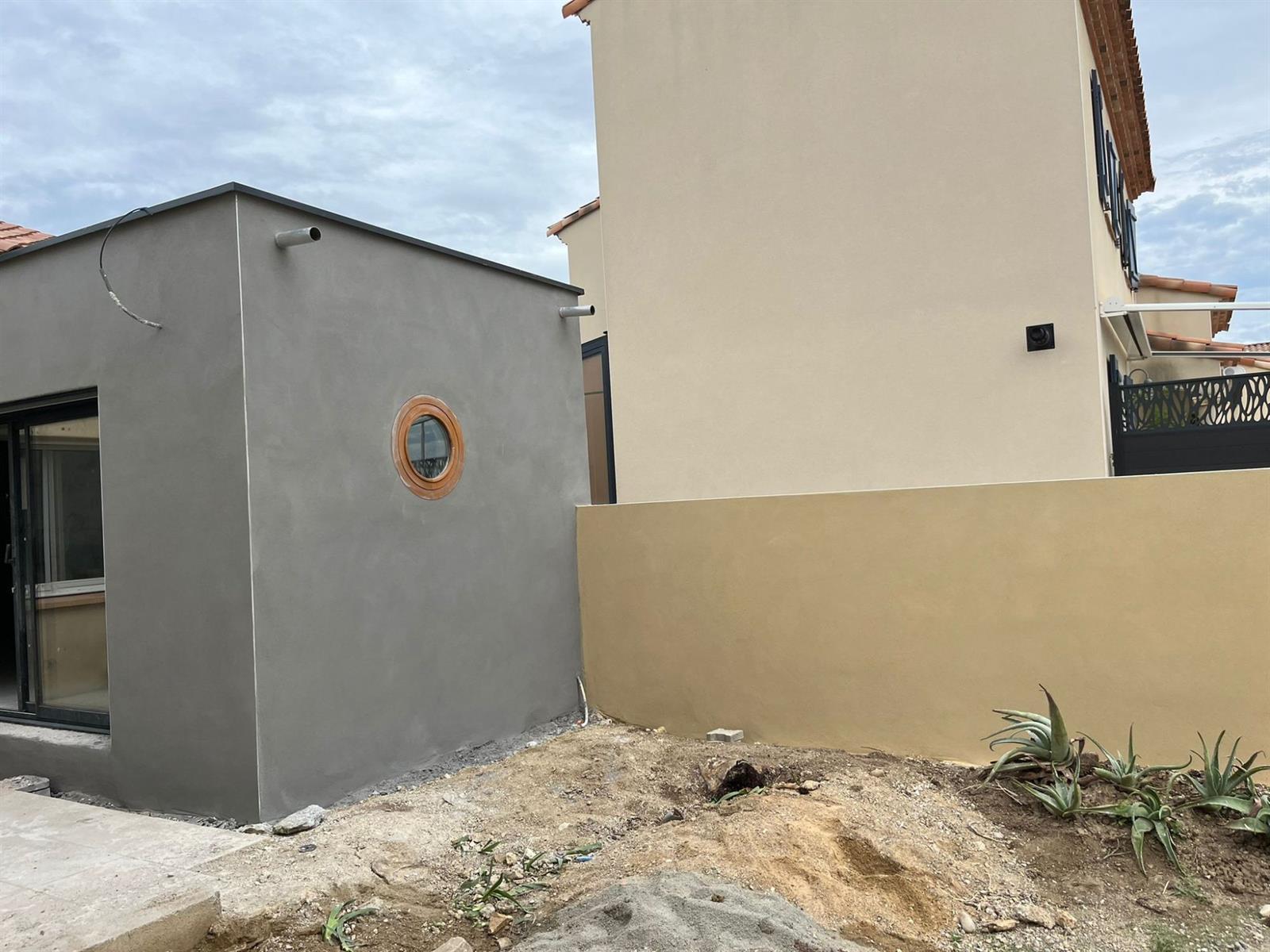
The Aude climate combines strong sunshine, sustained winds such as the tramontane and the marin, and rain that is rare but sometimes intense. On the coast, salt spray is added to that. These conditions put renders and paints under strain: hairline cracking, delamination, soiling, moss and lichen on the faces least exposed to the sun.
A deteriorating façade is not just a matter of appearance. Cracks or a render that has gone porous let water into the masonry, which can lead to more expensive problems: damp in the walls, degraded joints, efflorescence inside. Acting early keeps the work to a minimum.
Façade renovation is the most common intervention. It begins with an assessment of what is there, covering the nature of the substrate, cracks and damp marks, followed by appropriate cleaning, repairs to the masonry and to cracks, then a finish: render, façade paint or a protective coating.
External wall insulation, known in France as ITE (isolation thermique par l'extérieur), takes advantage of a façade renovation to improve comfort: insulation is fixed to the walls and then covered with a render or cladding. It is worth considering when the façade has to be redone in any case. French energy renovation grants are available; check the schemes in force before committing.
Finally, some problems call for specific treatment. Rising damp and efflorescence, common in older houses, are not solved by a coat of paint: the cause of the damp has to be dealt with first, then finishes chosen that let the wall breathe.
Changing the external appearance of a building is regulated. A façade renovation that changes the colour or the type of finish usually requires a déclaration préalable de travaux (prior notification of works), and many communes in the Aude specify a palette of colours or a type of render in their plan local d'urbanisme.
In protected areas, around listed monuments or in some historic centres, the opinion of the architecte des Bâtiments de France, the French heritage architect, may be required. The right reflex: ask your commune's planning department before choosing the finish.
A serious quote for a façade sets out the assessment, the preparation of the substrate, the products used and the finishes, not just an area and a price. Compare several proposals and be wary of offers made without a site visit.
Check the company's insurance too: the garantie décennale covers defects that affect the soundness or the weathertightness of the building, and the garantie de parfait achèvement covers defects reported in the year following handover. References for completed projects that you can go and see remain the best indicator of a professional's seriousness.
A renovated façade needs looking after. An annual visual inspection for cracks, delamination and damp marks, plus gentle cleaning when soiling appears, is usually enough. Avoid washing at too high a pressure, which damages renders.
On the faces most exposed to rain and wind, applying a surface water repellent can extend the protection. Properly maintained, a façade renovated to the right standards stays in good condition for many years.
MCI Construction, a masonry and structural work company based in Narbonne, works across the Grand Narbonne, the Corbières, the Minervois and the Aude coast, as far as Béziers. The company will assess your project on site and draw up a free quote.